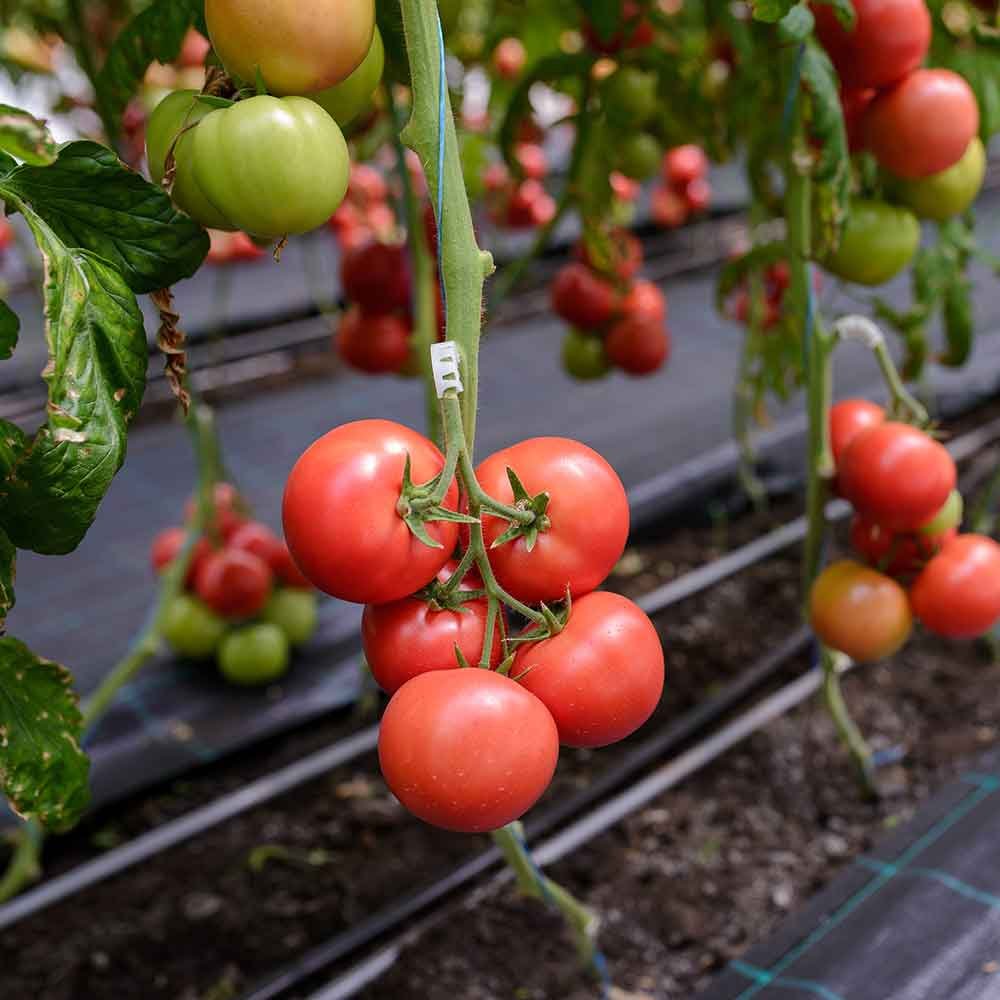
Tomatoes, among the most widely grown vegetables globally, hold tremendous yield potential, provided their nutritional needs are carefully optimized. Achieving a high-yielding tomato crop demands understanding precise nutrient dynamics and applying the right nutrients at critical stages.
Nutritional Dynamics in Tomato Plants
Tomato plants require a balanced and timely supply of essential macro and micronutrients throughout their growth stages. Each nutrient plays a crucial role, directly influencing growth, yield, and quality.
Key macro-nutrients essential for tomatoes include:
- Nitrogen (N): Fundamental for vigorous vegetative growth, leaf development, and overall plant health. Deficiency leads to pale green or yellowish leaves starting from older foliage.
- Phosphorus (P): Crucial for root development, flowering, fruit set, and seed formation. Plants deficient in phosphorus exhibit stunted growth, purple coloration in leaves, and poor fruit development.
- Potassium (K): Enhances fruit size, color, and flavor. It also boosts plant resistance against diseases and stress conditions. Potassium deficiency typically manifests as marginal leaf burn and reduced fruit quality.
- Calcium (Ca): Vital for proper fruit development, reducing blossom end rot, and enhancing cell wall strength. Deficient plants often display symptoms like blossom end rot and curling of younger leaves.
- Magnesium (Mg): Central to chlorophyll production and enzyme activation. Magnesium deficiency causes interveinal chlorosis, starting in older leaves.
- Sulfur (S): Essential for amino acid and protein formation. Sulfur deficiency resembles nitrogen deficiency but generally appears in younger leaves first.
Understanding Nutrient Demands for High Yields
A high-yielding tomato crop (approximately 30 tons per acre) significantly exhausts soil nutrients, making replenishment crucial. Approximate nutrient removal for a 30-ton per acre yield includes:
- Nitrogen (N): Approximately 130-150 kg
- Phosphorus (P₂O₅): Approximately 50-60 kg
- Potassium (K₂O): Approximately 220-250 kg
- Calcium (CaO): Approximately 100-120 kg
- Magnesium (MgO): Approximately 30-40 kg
- Sulfur (SO₃): Approximately 20-25 kg
These values provide a reference for balanced fertilizer planning to sustain and enhance yields.
Critical Nutrient Application Strategies
Ensuring maximum productivity involves:
- Balanced Fertilization: Utilize fertilizers like NPK blends and Potassium sulfate (SOP), which deliver nutrients efficiently. Fertilizers such as MAP (Monoammonium phosphate) can boost early root growth, while MKP (Monopotassium phosphate) aids during fruit setting and ripening.
- Micronutrient Management: Supplement crops with essential micronutrients (Fe, Mn, Cu, Zn, B, Mo), especially under intensive cultivation conditions.
- Biostimulant Integration: Application of biostimulants containing humic acids, amino acids, and seaweed extracts can greatly enhance nutrient uptake, stress resilience, and overall plant health.
- Optimal Timing: Nutrient demands peak during flowering and fruit development stages, requiring strategic nutrient applications at these critical phases.
Addressing Deficiencies Early
Identifying and correcting nutrient deficiencies early prevents yield losses and maintains plant vigor. Regular field scouting combined with diagnostic tools ensures prompt intervention:
- Calcium Deficiency: Blossom end rot on fruit
- Nitrogen Deficiency: General leaf yellowing, stunted growth
- Potassium Deficiency: Leaf edges yellowing, followed by browning and curling
- Magnesium Deficiency: Older leaves displaying interveinal chlorosis